Scientists link Himalayan flood to warming-driven mountain
Scientists analyzing the August 2026 Himalayan floods that killed over 1,300 people say the disaster was triggered by a bedrock collapse under a glacier
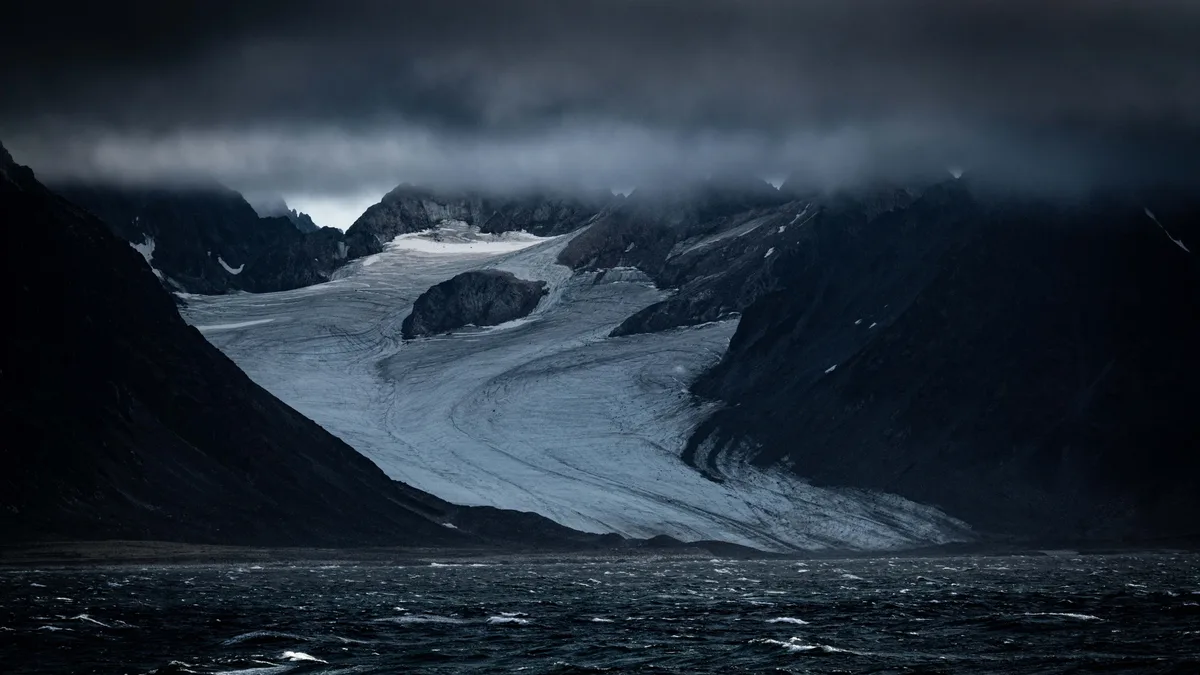
A catastrophic flash flood in the Himalayas on 26 August 2026 killed more than 1,300 people. The event, which destroyed settlements and infrastructure across Nepal and Tibet, was triggered by a massive collapse of bedrock and the glacier sitting atop it, according to a scientific report from the HiRisk consortium.
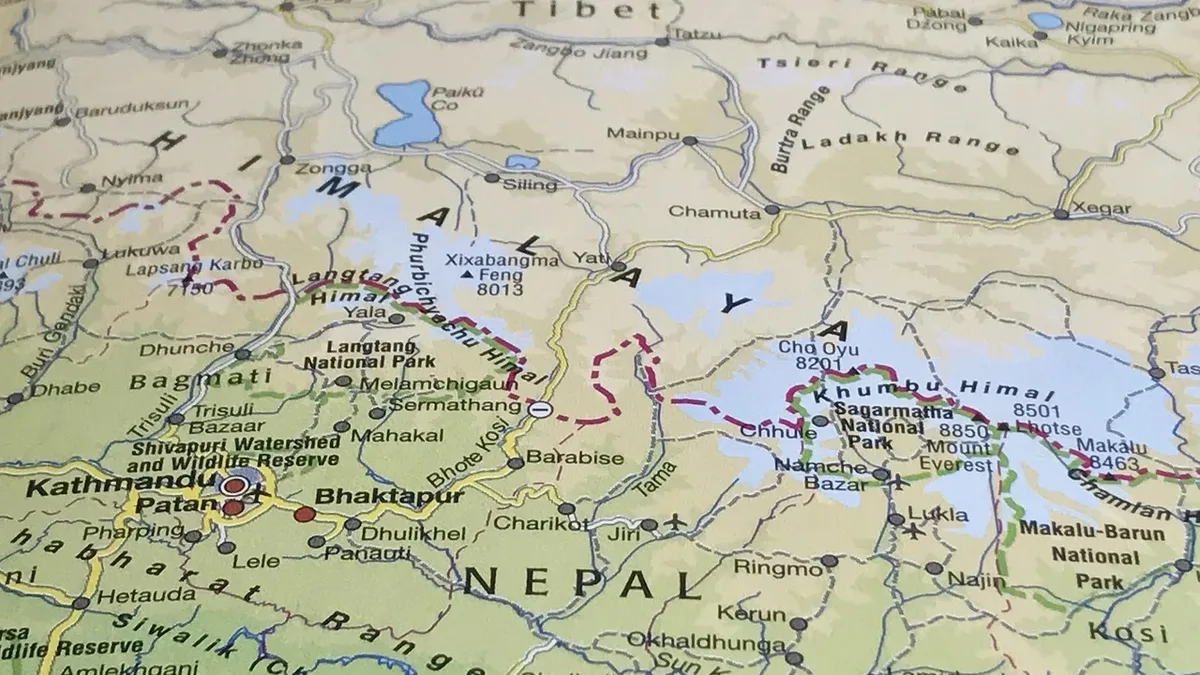
Scientists now describe the disaster as a "multi-hazard cascade." It began when a mass of bedrock and ice broke off Langtang-Lirung mountain in Nepal, plunging from 5,200 metres to a valley floor at 3,000 metres. The impact registered as equivalent to a magnitude 5.2 earthquake. The debris and melting ice slammed into the Lhende Khola river, briefly forming a lake that then burst, sending a wall of water and rock downstream at speeds up to 30 kilometres per hour.
The sequence of the disaster
The floodwave reached the town of Mugling, more than 130 kilometres downstream, by around 1pm local time. A report from the Center for Land Surface Hazards in the US noted the flood was "exceptionally fast, was sediment-laden and extreme in scale." In Galchhi, Nepal, the Trishuli river rose by nine metres in just 30 minutes.
The disaster continued days later. Dr Umesh Haritashya, a glaciologist at the University of Dayton, explained that a new "barrier lake" holding millions of cubic metres of water formed in Tibet and burst on 28 August, causing another surge. On 4 September, Nepal's disaster authority chief, Dharma Raj Upreti, told reporters that property and infrastructure worth at least $2.5 billion had been lost, with recovery costs estimated at around $53 million.
From glacier collapse to bedrock failure
Initial reports and the US Geological Survey pointed to a "glacial collapse and debris flow." However, subsequent satellite imagery revealed an "enormous chunk of the mountainous bedrock" beneath the glacier had also given way. Dr Kristen Cook, a geomorphologist at the Université Grenoble Alpes, told reporters, "The rock that the glacier was sitting on collapsed."
Dr Jakob Steiner, a geoscientist at the University of Graz, told Carbon Brief the trigger was likely "a mechanical failure of the rock material." He stated, "It was not a glacier that collapsed." Prof Bethan Davies, a glaciology professor at Newcastle University, noted such massive landslides are "an increasingly common occurrence" following rapid glacier melt.
Warming trends in the Himalayas
While no formal attribution study has been completed, scientists highlight rapid regional warming as a key factor. A June 2026 study in Global and Planetary Change found glacial areas of the Langtang catchment warmed at 0.31C per decade from 1960 to 2023, a rate more than three times that of lower elevations.
Dr Robert Rohde, chief scientist for Berkeley Earth, analyzed temperatures at the precise 5,200-metre collapse site. His data shows June-to-August temperatures have risen since 1940, with 2026's summer the fourth warmest on record. The days preceding the disaster recorded the hottest August temperatures ever at that location. On social media, Rohde stated, "It would be a hell of a coincidence if global warming wasn't at least partially to blame."
Climate change and mountain instability
Researchers identify several warming-linked processes that likely contributed. These include glacier retreat, which removes supporting ice, and permafrost thaw, which can weaken rock bonds. Prof Davies emphasized the role of ice, noting, "This would have been a much less significant tragedy if it had been just a rock-slope failure." The mixture of rock and ice with buried valley ice created a "hyperconcentrated flow" that amplified the destruction.
Despite some climate-sceptic claims that the bedrock collapse absolves climate change of a role, scientists counter that warming is making such compound hazards more probable. Nepal's Prime Minister, Balendra Shah, called the floods a "serious signal that...the risks we must bear in the Himalayan region are increasing" due to climate change. The analysis by Carbon Brief synthesizes the current scientific understanding, noting that while the precise trigger was a rock failure, the context is a rapidly warming, destabilizing high-mountain environment.