Climate targets fail to drive green
A Clarity AI analysis of 886 high-emitting firms finds companies with 2C-aligned climate targets spend only 27% of capital on green projects, barely more
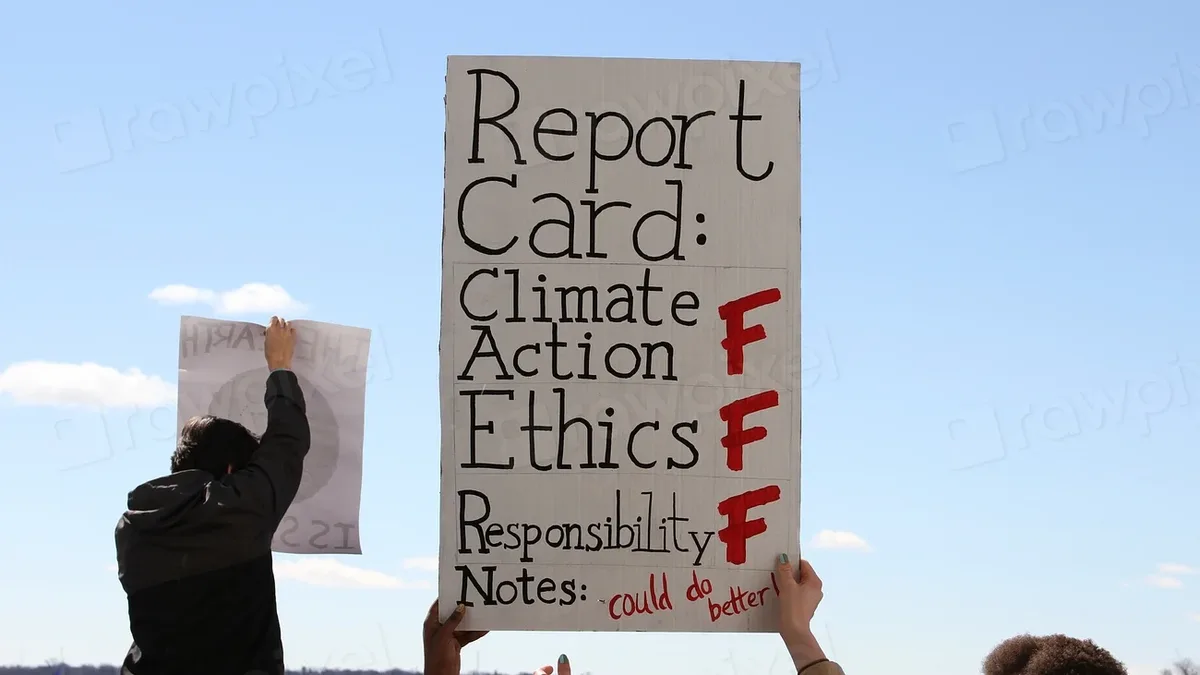
Companies with climate targets aligned to 2C or below spend only marginally more on green projects than firms with no stated goals. This is the finding of a new analysis by intelligence firm Clarity AI, which examined 886 high-emitting global companies that publicly report green capital expenditure.
The study found that target-setting companies allocated an average of 27% of their capital expenditure to green projects. Companies without a climate target allocated 25%. The narrow two-percentage-point gap suggests the presence of a climate target does not, on its own, establish that a company is making the capital investments required to meet it.
Sectoral spending reveals weak link
The relationship between targets and spending is weakest in sectors where decarbonisation remains difficult. In several key industries, companies without targets actually outspent their target-setting peers on green capital expenditure.
| Sector | Green CapEx (No Target) | Green CapEx (2C-or-lower Target) |
|---|---|---|
| Energy | 14% | 11% |
| Materials | 17% | 15% |
| Industrials | 24% | 23% |
| Consumer Discretionary | 13% | 13% |
The analysis concludes that the gap is particularly relevant in industries where replacing existing assets requires large amounts of capital and where low-carbon technologies or their economics are still developing.
Where targets do drive investment
Utilities and real estate provide a contrasting picture. In these sectors, ambitious target setting coincided with a material increase in green capital expenditure.
In utilities, green CapEx rose from 55% among companies without a stated target to 63% among those with a 2C-or-lower target. In real estate, the corresponding figures were 28% and 35%. These were increases of 8 and 7 percentage points respectively.
Clarity AI notes these sectors have access to transition investments with comparatively established commercial applications. Renewable power generation, grid electrification and energy efficiency can offer clearer investment cases than technologies that remain expensive or less mature.
This points to a more complicated relationship between climate ambition and corporate investment. Targets may influence capital allocation when the technologies and economics make implementation feasible. Where the business case is less established, the target appears much less able to shift the capital budget.
The challenge of disclosure
The new findings build on earlier Clarity AI research which found fewer than half of the world’s highest-emitting companies disclose green CapEx. Outside Europe, the proportion falls to around 30%. This creates a basic problem for investors, as there is often no consistent information showing how much of a company’s capital budget goes toward climate mitigation.
Among 232 companies that disclosed green CapEx in the MSCI ACWI global equity index, the earlier study found substantial differences between industries. Airlines and electric utilities had relatively high average green CapEx ratios, at 71% and 46%, respectively. Marine shipping and auto manufacturing were below 30%, while steel, cement and oil and gas were below 10%.
European companies, where climate-related reporting is more developed, reported average green CapEx ratios of 23% in the EU-27 and 21% in the rest of Europe. The researchers cautioned that higher levels of disclosure did not necessarily correspond to higher levels of green investment. They also warned that voluntary reporting elsewhere may produce survivorship bias, because companies performing better may be more likely to disclose.
Taken together, Clarity AI suggests that climate targets are best treated as one part of a transition assessment, rather than as evidence that a company is already financing the transition.