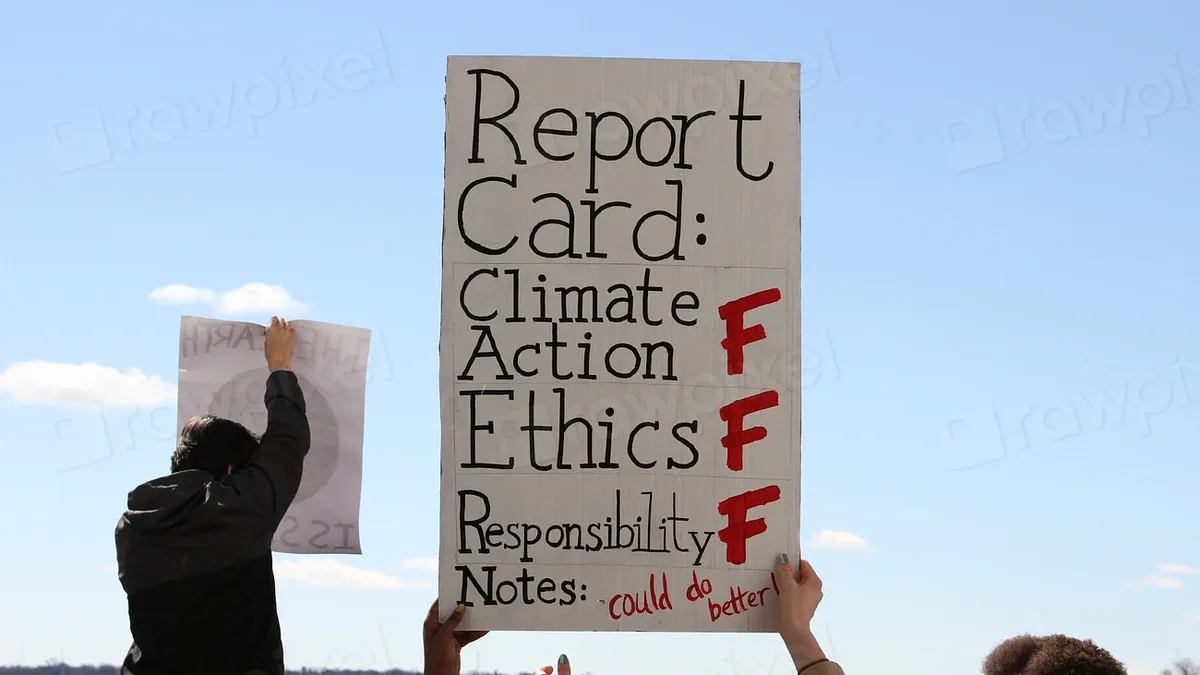
Global Energy Efficiency Goal Off Track Despite Policy Push
The world is not on course to meet the COP28 goal of doubling energy efficiency improvements, with growth at 1.8% in 2024, far below the 4% target.

The world is falling short of a critical global energy goal. While renewable capacity is expanding rapidly, the rate of energy efficiency improvement is lagging, reaching only 1.8% in 2024 according to International Energy Agency (IEA) estimates. This is far below the 4% annual target agreed by nearly 200 nations at the COP28 climate summit in Dubai.
Jérôme Bilodeau, energy efficiency programme manager at the IEA, told reporters that "the world is not currently on track" to meet the COP28 efficiency goal. He stated it remains achievable with the right policies. Global electricity demand is predicted to grow by 3.8% in 2027, driven by heavy industry and the explosive growth of data centers for AI.
Policy as a Major Tool
Experts argue that robust policy is the key to unlocking efficiency gains. The EU's Energy Efficiency Directive, first adopted in 2012 and updated twice, is cited as a model. Mario Giordano, global head of public and government affairs at lighting multinational Signify, calls the legislation "market transformational." It created long-term certainty through binding targets and renovation requirements.
The directive is credited with helping the EU use a record low amount of energy in 2024, 20% less than in 2006. One of the next steps is the Energy Performance of Buildings Directive, which seeks to upgrade old buildings and introduces a zero-emissions standard for new public ones. It is a huge opportunity to renovate the continent’s building stock, and lighting is everywhere, Giordano said.
Closing the Gap to 4%
The IEA recommends closing policy gaps and raising the ambition of existing measures. Bilodeau noted that nine out of 10 countries have achieved a rate of improvement of 4% at least one year over the past decade, proving it is possible. He pointed out that countries representing 85% of global energy demand announced hundreds of new or updated policies in 2025 alone, partly turbocharged by the global energy crisis following the closure of the Strait of Hormuz.
A major gap is building standards. The IEA says efficiency standards for new buildings are lacking in almost half of all countries. In some countries, a building that meets the local efficiency standard may in fact be using three times as much energy as one in another country with a similar climate but with higher efficiency standards, Bilodeau added.
Lighting as an Integrated Solution
Giordano argues for a whole-system view where efficiency, electrification, and renewables are treated as one integrated system. He believes lighting is a scalable and cost-effective part of this. As a mature technology installed almost everywhere, it can be upgraded quickly to provide immediate savings.
Lighting accounts for around 8% of global electricity demand. Signify estimates that switching to efficient LED technologies could save enough electricity to power up to 300 million heat pumps, or 400 million electric vehicles worldwide. You can reduce emissions, free up electricity for electrification purposes, and also save money that can be invested elsewhere, Giordano said.
Using energy more intelligently is also key. The English city of Liverpool completed a project in 2026 installing 'traffic adaptive lighting' on routes between a new football stadium and the city centre. The council can now respond to real-time demand fluctuations, such as on match days. Signify says this approach could offer up to 30% in cost savings over the next decade.
In the headlong rush to build renewable capacity, experts warn that insufficient attention to efficiency risks undermining progress. Stronger, targeted policies are seen as an urgent first step, but time is running out to make energy work harder.