
Attribution Science
| Primary Purpose | To determine the causal link between specific events and climate change. |
|---|---|
| Key Outputs | Fraction of attributable risk (FAR) and probability of occurrence statements. |
| Typical Subjects | Extreme weather events (heatwaves, floods, storms, droughts). |
| Methodological Basis | Climate models, observational data, and statistical analysis. |
| Timeframe for Analysis | Conducted post-event, typically within months to a few years. |
| Scientific Consensus | Established field within climate science, though attribution confidence varies by event type. |
| Leading Institutions | World Weather Attribution, NOAA, academic research groups. |
Overview
Attribution science is a specialized field of climate science that quantifies the influence of human-caused climate change on specific extreme weather events or long-term climate trends. It employs statistical analyses and climate model simulations to compare the real world with a hypothetical world without anthropogenic greenhouse gas emissions. The core output is a probabilistic statement about how much more likely or severe an event, such as a heatwave, flood, or storm, has become due to human activity. This discipline has evolved rapidly from a nascent concept to an operational capability within the last two decades. Its findings provide a critical physical evidence base that directly informs climate policy and legal frameworks by moving from general climate change to demonstrable responsibility for concrete impacts. In the European context, this evidence is increasingly integrated into policy instruments designed for adaptation, loss and damage, and climate litigation.
What to know
The methodology typically involves running thousands of simulations of climate models under two conditions: one representing the actual current climate and another representing a counterfactual climate without human influence. Researchers then analyze the frequency and intensity of a given event in both sets of simulations to calculate a probability ratio, often expressed as an event being made "X times more likely" or its intensity increased by a certain percentage. It is crucial to understand that attribution science does not claim climate change *causes* a singular event, but rather that it alters the odds and characteristics of such events. Different types of events have different levels of attribution confidence; heatwaves are often most straightforward to attribute, while complex events like tropical cyclones involve more uncertainty. The field is spearheaded by academic consortia like World Weather Attribution, which conduct rapid assessments following disasters. This scientific evidence forms a key pillar of the physical case for urgent climate action, transforming abstract global warming projections into tangible, localized consequences.
Common questions
A frequent question is whether a single weather event can be blamed on climate change, to which attribution science responds by framing the answer in terms of changed probabilities rather than sole causation. People often ask about the speed of analysis, and while rapid attribution studies can be published within days or weeks, more comprehensive reviews require months for peer-reviewed publication. Another common inquiry concerns the role of natural variability, which attribution studies explicitly seek to separate from the human-caused signal using statistical methods. Many wonder if all extreme weather is now linked to climate change, but the scientific answer is that the link is strong and established for certain event types like heat extremes, while for others the connection is less clear or still under investigation. Questions also arise about the practical use of the findings, which extend beyond public communication to direct applications in climate risk assessment, infrastructure design, and legal liability. Finally, individuals often question the reliability of climate models used, which are the same extensively validated tools used for future climate projections and are continually improved.
Pros and cons
A primary advantage of attribution science is its power to make climate change concretely relevant to policymakers and the public by connecting it to immediate, experienced events. It provides a robust, quantitative foundation for climate litigation, where plaintiffs seek to establish liability for damages from emitters or governments. However, a significant con is that complex, compound events or events in regions with poor historical data can yield results with high uncertainty, which may be misrepresented or dismissed in policy debates. A common mistake is the oversimplification of findings into binary statements of "caused" or "not caused," stripping away the crucial probabilistic nuance. Some policymakers and stakeholders regret relying on preliminary rapid assessments without acknowledging their limitations, potentially basing decisions on findings that may be refined by later, more detailed study. The technical complexity of the methods can also create a communication barrier, making it difficult for non-specialists to interpret the results correctly and leading to either unwarranted skepticism or overconfidence in the conclusions.
Who it suits
This evidence is particularly suited for climate adaptation planners at national and municipal levels, who require granular risk assessments to justify and design resilient infrastructure projects. It serves policymakers drafting or updating climate laws, such as those governing emissions targets or disaster response frameworks, by providing an incontrovertible link between emissions and specific harms. The field is essential for legal professionals and courts engaged in climate liability cases, where establishing causation is a central challenge. Insurance and reinsurance companies also utilize attribution findings to model evolving climate risks and adjust their actuarial models for extreme events. Furthermore, it suits journalists and communicators committed to accurately explaining the local impacts of climate change, moving beyond generic narratives. Finally, it is a critical tool for advocacy groups and non-governmental organizations seeking to hold public and private sector actors accountable for their contributions to climate change and its consequences.
Latest Attribution Science news
Latest reporting
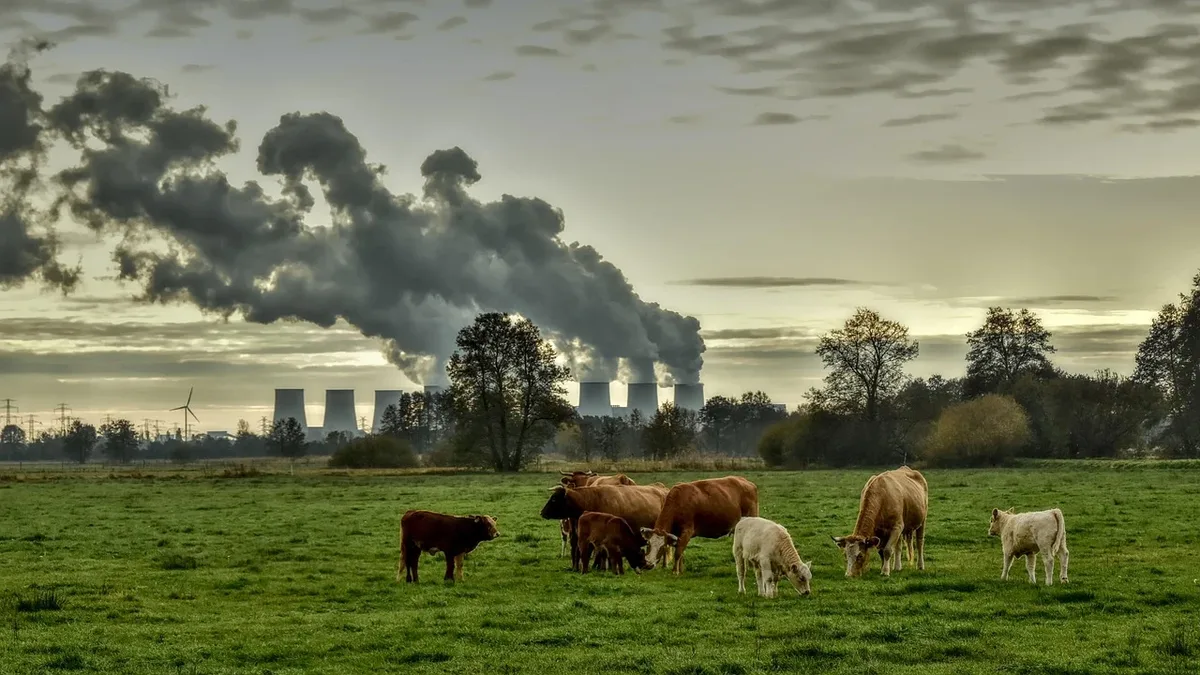
UK Dairy Roadmap sets new climate and
The UK dairy industry has updated its environmental roadmap, setting new science-based climate targets and packaging goals for processors.

Schott Abandons Climate-Neutral Production Goal in Favor of Science-Based Targets
German multinational Schott has discontinued its internal goal of achieving carbon-neutral production by 2030, shifting focus towards reducing...