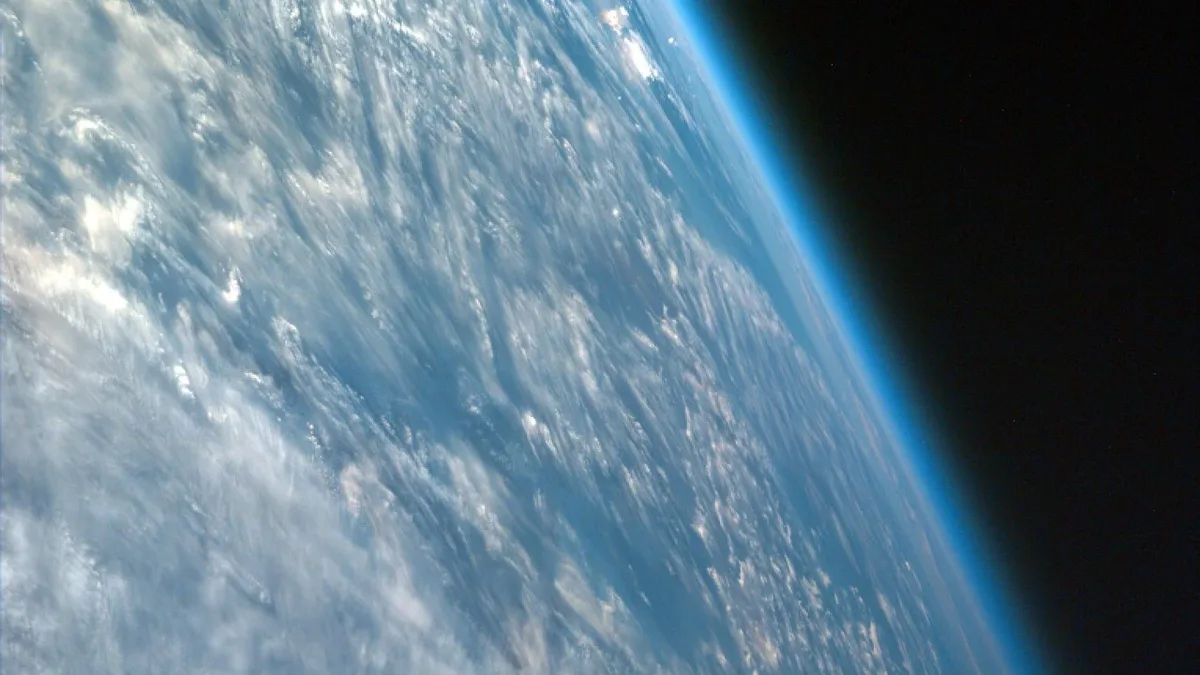
The Carbon Cycle
| Country of origin | Earth science (as a conceptual model) |
|---|---|
| First documented | 19th century |
| Original use | To describe and quantify the exchange of carbon among Earth's reservoirs |
| Key reservoirs | Atmosphere, land biosphere, oceans, sediments, Earth's interior |
| Timescale of major cycles | Decades to millions of years |
| Key processes | Photosynthesis, respiration, combustion, sedimentation, weathering |
| Human perturbation | Fossil fuel combustion and land-use change |
Origin and history
The Carbon Cycle is a fundamental biogeochemical process describing the movement of carbon between Earth's major reservoirs. Its conceptual understanding is not attributed to a single country or individual but evolved through centuries of scientific discovery. Early modern insights began in the 18th century with the work of chemists like Joseph Black, who identified carbon dioxide as a distinct gas. The 19th century saw foundational work on plant physiology and the role of carbon in photosynthesis and respiration. The comprehensive, interconnected model of the global carbon cycle, integrating the atmosphere, oceans, biosphere, and geosphere, was solidified through multidisciplinary research in the mid-20th century. This understanding was crucial for later recognizing anthropogenic disruption, with systematic monitoring of atmospheric carbon dioxide concentrations beginning at Mauna Loa Observatory in the 1950s. The cycle itself is a natural planetary process, but its scientific elucidation is a product of global scientific endeavor.
What it is for
The Carbon Cycle is the planetary system that regulates the distribution and concentration of carbon, a fundamental element for life, across Earth's interacting spheres. Its primary function is to maintain a dynamic balance that enables the storage, transfer, and recycling of carbon atoms over various timescales. It facilitates the biological process of photosynthesis, where plants and other organisms convert atmospheric carbon dioxide into organic matter, forming the base of most food webs. Concurrently, it governs the release of stored carbon back to the atmosphere through respiration, decomposition, and combustion. The cycle also manages the long-term sequestration of carbon in geological reservoirs like sedimentary rocks and fossil fuels through processes such as burial and mineralization. Furthermore, it controls the exchange of carbon between the atmosphere and the oceans, which act as a massive sink, influencing global climate and ocean chemistry.
Overview
The global carbon cycle operates through a series of interconnected fluxes and reservoirs, often categorized into "fast" and "slow" components. The fast cycle involves the relatively rapid exchange of carbon between the atmosphere, terrestrial vegetation, soils, and the surface ocean, with processes occurring on timescales from minutes to centuries. Key fluxes include photosynthesis, respiration, air-sea gas exchange, and dissolution. The slow or geological cycle operates over millions of years and involves the weathering of silicate rocks, the formation of carbonate sediments on the ocean floor, and the eventual subduction and volcanic outgassing of carbon. Human activities, primarily since the Industrial Revolution, have become a significant new flux by extracting and burning fossil fuels (slow-cycle carbon) and converting forests, rapidly injecting carbon dioxide into the fast cycle. This anthropogenic perturbation is the core physical evidence underpinning climate change policy, as it disrupts the natural equilibrium, increasing atmospheric greenhouse gas concentrations.
What to know
A critical fact is that the natural carbon cycle is not broken but has been pushed into a new, human-dominated state with a higher atmospheric carbon dioxide concentration. The ocean absorbs approximately a quarter of anthropogenic carbon dioxide emissions, leading to ocean acidification, which harms marine calcifying organisms like corals and shellfish. Permafrost thaw in the Arctic represents a dangerous feedback loop, releasing previously locked-away carbon as the region warms. Carbon stored in soils is vast and sensitive to land-use changes, where practices like deforestation and intensive agriculture can turn soils from carbon sinks into sources. The concept of "carbon budgets" is derived from cycle dynamics, estimating the finite amount of carbon that can be emitted for a given probability of staying below a specific temperature threshold. Understanding residence times is essential; carbon dioxide added to the atmosphere today will influence climate for centuries due to the slow processes that remove it, making current emissions a long-term commitment.
Common questions
A frequent question is whether planting trees alone can solve the climate crisis; while afforestation is a valuable carbon sink, it cannot compensate for ongoing fossil fuel emissions at the current scale due to land constraints and the impermanence of biological storage. People often ask about the largest carbon reservoirs; the largest by far are sedimentary rocks and the deep ocean, but these exchange carbon with the atmosphere very slowly compared to the more dynamic but smaller living biomass and soil reservoirs. Many wonder why carbon dioxide is the focus over other gases; it is the primary long-lived greenhouse gas emitted by human activity and sets the planet's baseline warming, whereas others like methane are more potent but shorter-lived. A common query concerns natural versus human emissions; volcanic emissions are dwarfed by human emissions, which are now an order of magnitude larger. Individuals ask about carbon neutrality, which requires balancing emissions with removals so that net flux to the atmosphere is zero. Finally, people question if technology can mimic the cycle; proposed geoengineering like direct air capture seeks to create an artificial removal flux but operates at a trivial scale compared to natural processes and current emissions.
Pros and cons
The carbon cycle's primary pro is its inherent capacity to regulate Earth's climate and sustain life through balanced, self-correcting processes over geological time. It provides essential ecosystem services, including food production, climate stability, and ocean buffering. However, a significant con is its vulnerability to rapid, large-scale anthropogenic forcing, to which its natural feedbacks respond too slowly to prevent significant disruption. This leads to time-lag effects, where the full consequences of today's emissions will be felt by future generations, creating an intergenerational equity problem. A common policy mistake is over-reliance on biological sequestration (e.g., forests) without adequately addressing fossil fuel emissions at source, risking carbon release from sinks due to wildfires or land-use change. Entities that regret simplistic approaches are those investing in single, non-permanent offset projects that fail to deliver promised long-term atmospheric benefits. The cycle's complexity also makes modeling future scenarios challenging, introducing uncertainty into policy planning, and its global nature means uncoordinated action leads to leakage, where emissions reductions in one region cause increases in another.
Who it suits
Understanding the carbon cycle primarily suits policymakers and regulators who must design instruments that align with biogeochemical realities, such as emissions trading systems or land-use regulations. It is essential for climate scientists and modelers projecting future conditions under various emission pathways and intervention scenarios. Environmental engineers and technologists developing carbon removal or emission reduction systems require this knowledge to ensure their solutions effectively interact with natural fluxes. Corporate sustainability officers and investors conducting carbon accounting and risk assessments need a firm grasp to avoid greenwashing and make credible net-zero plans. Agricultural and forestry professionals managing landscapes must understand it to implement practices that enhance soil and biomass carbon storage. Finally, it is crucial for educators and communicators who translate complex system dynamics for the public, emphasizing the irreversibility of some changes and the necessity of systemic, rather than incremental, action.
Latest The Carbon Cycle news
Latest reporting

Data Centres Emit More Than ExxonMobil’s UK Operations
Two large data centre projects in the UK are projected to emit more carbon annually than ExxonMobil’s UK operations, prompting environmental scrutiny...
SLB named reservoir partner for Norwegian Havstjerne CO₂ project
SLB appointed as strategic reservoir partner for the Havstjerne offshore carbon storage project, which will store CO₂ from European industrial...

Countries Seek Ocean Roadmap at COP31 as Marine Heat Breaks Records
A group of countries is pushing for the UN COP31 summit to deliver meaningful commitments to protect marine ecosystems as record-breaking ocean...
Schott Abandons Climate-Neutral Production Goal in Favor of Science-Based Targets
German multinational Schott has discontinued its internal goal of achieving carbon-neutral production by 2030, shifting focus towards reducing...
Scientists and industry clash over GHG Protocol forest carbon rules
A senior figure involved in setting standards for forest carbon emissions has resigned, citing fundamental disagreements over scientific integrity.
How the ‘Super El Niño’ Will Reshape Global Weather Patterns
The world is experiencing a record-breaking 'super El Niño,' a phase of the El Niño-Southern Oscillation (ENSO) cycle that temporarily raises global...