US pushes to weaken shipping emissions plan
The United States and Saudi Arabia are expected to try to dilute the International Maritime Organization’s Net-Zero Framework at upcoming London talks, while other nations push for stricter targets.
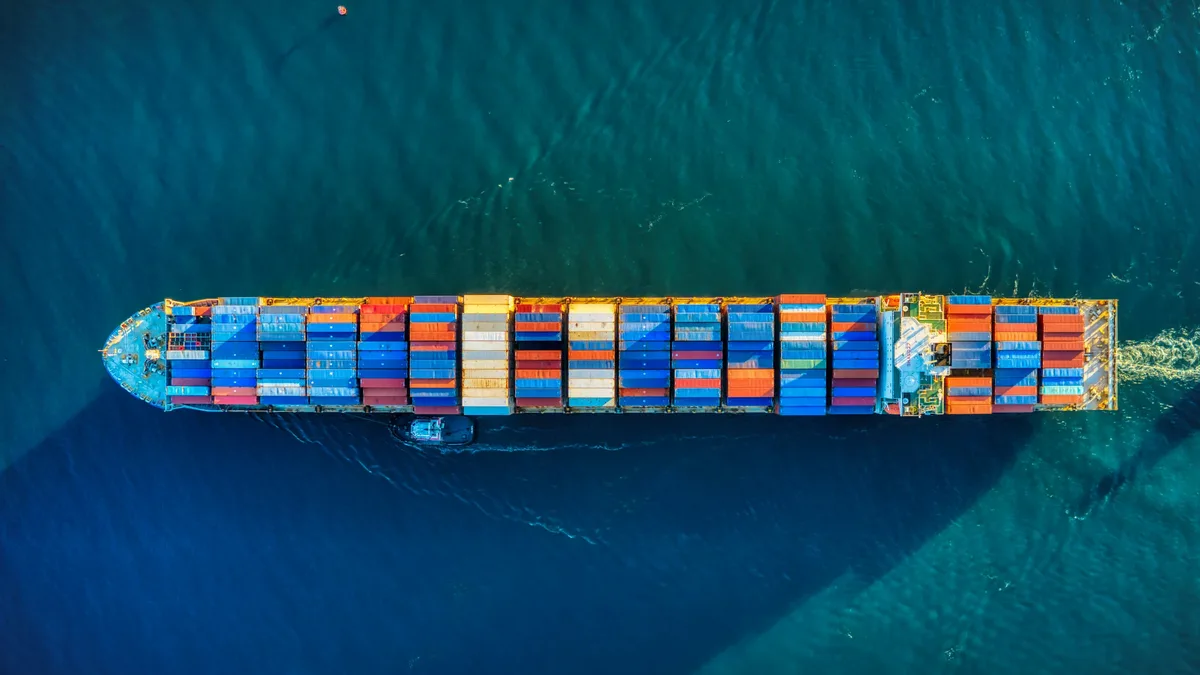
The United States and Saudi Arabia are set to try to weaken the International Maritime Organization’s (IMO) Net-Zero Framework (NZF) at closed-door talks in London in early September. Shipping, which accounts for 3% of global emissions, relies heavily on dirty bunker fuels, and the proposed plan aims to reduce those emissions.
The US and its oil-producing allies want a softer system. They are likely to back a Liberian proposal that, according to expert analysis from the Institute of Marine Engineering, Science and Technology (IMarEST), would cut emissions by only half at most by 2050-far below the sector’s agreed climate goals.
Proposals on the table
Governments will discuss five different proposals submitted before the meeting. The most ambitious comes from Tuvalu, which has called for a levy on a ship’s entire emissions rather than just those above a threshold, as the NZF envisions. Tuvalu’s transport minister Simon Kofe described the NZF as disappointing and not ambitious enough.
Six Pacific countries abstained in the vote on the NZF, using the delay to push for more ambition.
John Kautoke, an advisor to the Pacific group 6PAC+, told reporters that the NZF “cannot diminish its already inadequate ambition. If anything, the NZF must increase in ambition if we are going to renegotiate its parameters.”
IMarEST analysis shows that only Tuvalu’s proposal would meet the 2030 and 2040 emissions reduction targets agreed by governments in 2023-20% cuts between 2008 and 2030, 70% by 2040, and net zero close to 2050. The NZF, while not enough to meet the targets, would reduce emissions more cheaply than the Pacific proposal.
A Brazilian proposal, which fought hard for the NZF last October, suggests tweaking the framework to make meeting targets easier in the short term and harder in the long term. IMarEST estimates it would lead to higher cumulative emissions than either the NZF or Pacific proposals.
Liberia’s weaker plan
The Liberian proposal would weaken the emissions reduction targets. IMarEST says it would cut the industry’s emissions at most by a half by 2050, falling far short of the target agreed in 2023. It would also replace the NZF’s fees for missing targets with a carbon-trading system, eliminating the Net Zero Fund that would otherwise incentivise green fuels and support poorer nations.
Pacific advisor Kautoke warned that adopting the Liberian proposal would mean “the Pacific will not receive any support to deal with the disproportionately negative impacts created by the cost of the transition.”
Japan’s shipowner-friendly tweak
Japan has submitted a late proposal to amend the NZF so that shipowners have more control over how the fees they would pay for emitting above a set threshold are spent. University College London professor Tristan Smith argued that this change would remove a central mechanism to incentivise investments in clean fuels. He wrote on LinkedIn that under the system put forward by Japan, shipowners could choose which green projects their fees would go to, rather than funding broader just-transition projects.
Next steps
Governments are expected to make statements next week indicating which proposals-or aspects of proposals-they prefer. A further set of talks will run from November 23-27, followed by a potential final round from November 30 to December 4. A new framework could be adopted if two-thirds of countries that are present and signed up to the Marpol Annex VI vote in favour of it, as they did in April 2025.
The US and its allies are also trying to change the rules to make the next stage more difficult, a move that could affect the fixtures of global shipping.
---
| Target | 2008-2030 | 2040 | 2050 |
|---|---|---|---|
| Agreed | 20% | 70% | Net zero |
Source: Climate Home News