Indonesia's Nickel Industry Struggles with Sustainability
Indonesia's nickel production cuts are not enough to create a sustainable industry, despite the government's efforts to push up prices and produce more sustainable nickel.
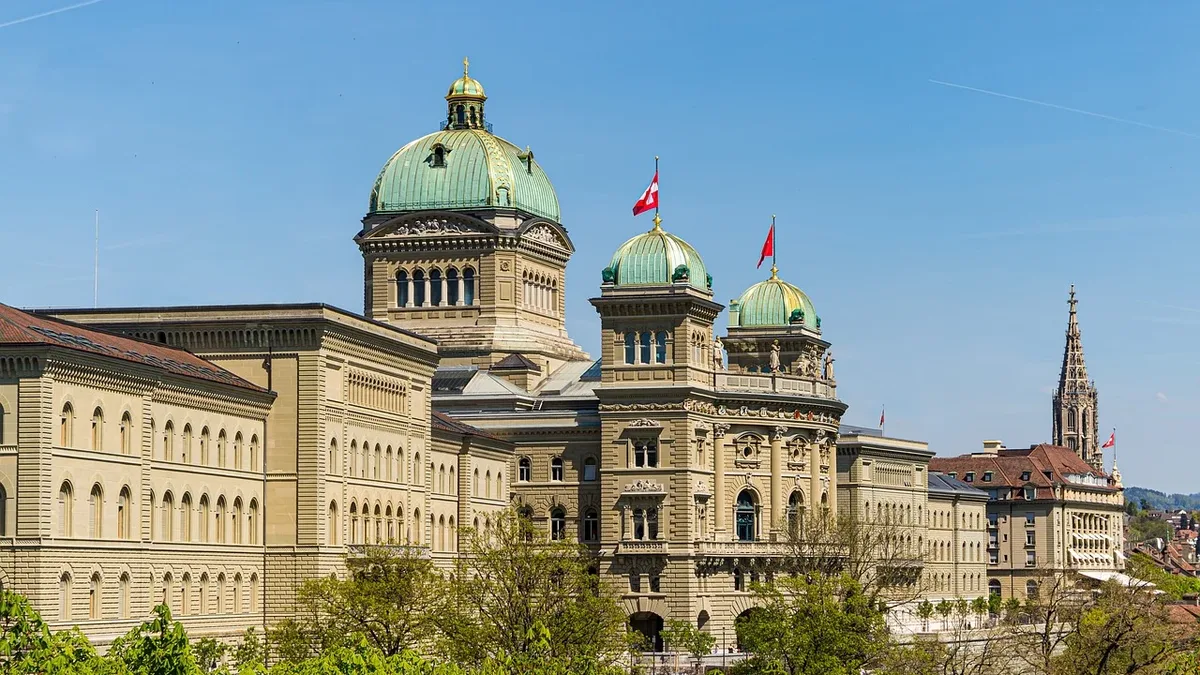
The Indonesian government has restricted nickel production to push up prices, but producing more sustainable nickel for a premium requires addressing the industry's coal issue.
Indonesia's Nickel Industry Struggles with Sustainability
Indonesia produces around 60% of the world's nickel, a metal used to manufacture batteries for electric vehicles (EVs). The government sharply reduced how much of its nickel can be extracted from the ground in 2026, with production quotas reduced by around 40% this year compared to 2025.
The Cuts Aren't Enough
The policy has sparked a vivid debate in Indonesian policy circles: how can the country shift its strategy from a decade of mining vast quantities of cheap nickel to producing a high-value and low-carbon material that the rest of the world wants for EV batteries. The cuts aren't a silver bullet to clean up Indonesia's nickel industry, whose smelters are powered by coal - the most polluting fossil fuels.
Restricting Indonesia's Nickel Output
Production quotas were introduced to stop the collapse of nickel prices because of oversupply in the market. Prices had fallen more than 40% in 2023 alone and kept sliding as Indonesian supply kept growing, hitting a four-year low of around $13,900 a ton in late 2025. Prices jumped to $20,000 a ton in May, the highest since 2024.
| Production Quota Reduction | 2025 | 2026 |
|---|---|---|
| Overall | 0% | -40% |
| Weda Bay | 0% | -70% |
The Market Responds
Low-carbon nickel now sells for a real premium, roughly $18,800 to $19,300 a ton compared with $17,900 to $18,300 otherwise, as carmakers seek to source cleaner materials to comply with the European Union's new emissions rules for imports. In turn, this is incentivising the industry to do more to green its operations. Vale Indonesia's smelter in South Sulawesi now runs almost entirely on hydropower, for example.
Unequal Benefits
For Indonesia to truly benefit from producing cleaner and high-value nickel, it needs to reap the economic benefits too. Although the industry has boosted the country's economic growth, the reality on the ground tells a different story. Konawe in Southeast Sulawesi is home to a major smelting complex.
Growth in the district jumped from 6% to 22% between 2015 and 2023, driven almost entirely by the nickel industry, according to a study by the Lowy Institute study. At the same time, poverty levels increased slightly and unemployment remained unchanged.
| District | Growth Rate (2015-2023) |
|---|---|
| Konawe | 16% |
| Halmahera | 5% |
The government has abandoned its plan to shut down a major coal plant, which was a key part of the deal, raising doubts about the donor-backed approach. In Halmahera, another epicentre of the nickel industry, spending by the poorest fifth grew just 5% between 2019 and 2022, compared with 28% for the wealthiest fifth, according to a separate study.
The Natural Resource Governance Institute has found that decentralisation handed local governments power to approve new mines faster than they could build their capacity to manage them. Higher output raises national income on paper, but local governments remain constrained by fiscal rules and infrastructure costs that scale with mining.
None of this makes the 2026 quota cuts a mistake. Indonesia has every right to defend its pricing power over a resource it controls. But limiting extraction isn’t going to fix underlying issues around environmental enforcement and revenue-sharing. That requires rules that are consistently enforced, royalties that reach communities living by the mines, and a plan to wean smelters off coal.
Source: Climate Home News