Carbon Capture and Storage: A Key Technology in the Quest for Net-Zero Emissions
The role of carbon capture and storage (CCS) in achieving net-zero emissions is a topic of ongoing debate. While some see it as a critical technology for cutting emissions from key sectors, others have raised concerns about its high costs, ties to the fossil-fuel industry, and poor performance record.
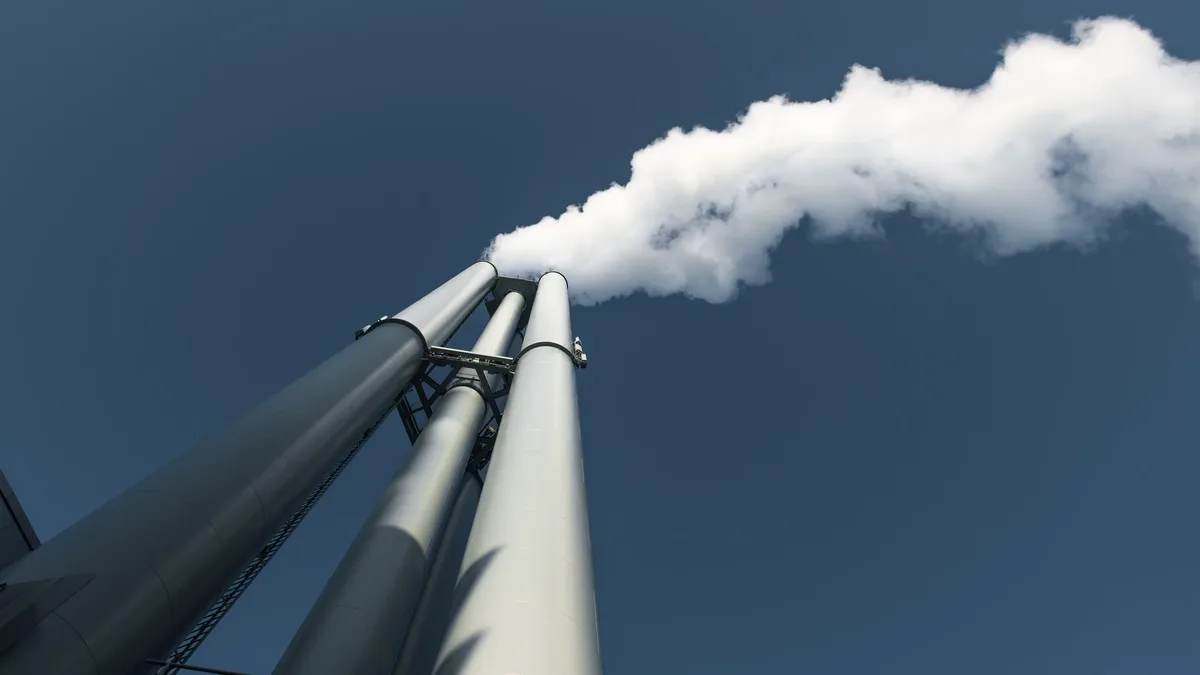
Carbon capture and storage (CCS) is a technology that has gained significant attention in recent years as a potential solution to the challenge of achieving net-zero emissions. The idea behind CCS is to capture carbon dioxide (CO2) emissions released from factories and power plants, and store them permanently underground, preventing them from contributing to climate change. The Intergovernmental Panel on Climate Change (IPCC) has described CCS as "critical" for cutting emissions from key sectors, including cement production, which is one of the world's highest-emitting industries.
The UK has committed to investing £21.7 billion in its nascent CCS industry as part of its net-zero strategy. However, despite the potential of CCS, there has been a backlash against plans for its implementation. Critics of CCS argue that it is a "dangerous distraction" or a "false climate solution" due to its high costs, ties to the fossil-fuel industry, and poor performance record.
They point out that the technology has failed to deliver as quickly as expected, and that policy support has wavered. Furthermore, critics argue that CCS remains "unproven" on the scale required to make a meaningful impact on global emissions. Despite these criticisms, CCS is expected to play a significant role in achieving net-zero emissions.
Many global pathways that have been set out for achieving net-zero rely on the use of CCS at fossil-fuel plants and industrial sites. These models have been instrumental in bringing CCS back onto the agenda, according to Lina Lefstad, an ecological economist at Lund University. Influential organisations, including the International Renewable Energy Agency (IRENA) and the oil company Shell, rely on CCS in their net-zero scenarios.
The IEA has stated that net-zero would be "virtually impossible" without CCS. These scenarios often include 10s to 100s of times more CCS capacity being built in the coming decades. The current state of CCS is that there are 75 operational CCS projects around the world, capturing 62.5 million tonnes of CO2 each year.
This is equivalent to the annual greenhouse gas emissions of Ecuador. However, the amount of CO2 currently being captured and stored is a tiny fraction of the total emissions from fossil-fuel use. The future of CCS is uncertain, with a surge of projects entering the global CCS pipeline in recent years.
According to the IEA, 93.7 million tonnes of capture or storage capacity is under construction as of February 2026, and another 1,279.6 million tonnes is in the "planning" stages. However, the industry has a long history of projects being cancelled or delayed. The planned projects, if realised, would lead to a large expansion of facilities dedicated to permanent CO2 storage that does not involve extracting more oil.
They would also include significant growth in sectors where CCS is virtually non-existent, such as steel, hydrogen, and cement production. The role of CCS in achieving net-zero emissions is a complex and multifaceted issue. While it has the potential to make a significant contribution, it is not a silver bullet solution.
The challenges and limitations of CCS must be carefully considered, and its implementation must be carefully planned and executed.
CCS: A Technology in Transition
CCS has a long history, dating back to the 1970s when it was first proposed as a way to deal with CO2 emissions. However, it has only gained traction as a proposed climate solution in recent years. The first CCS project was installed at a US oil well in the early 1970s, and it was used for enhanced oil recovery.
This process involves injecting captured CO2 into depleted wells, which stores CO2 but also helps to extract more oil. Today, most of the CO2 captured is used for this purpose, with around three-quarters of it used for enhanced oil recovery. However, there is growing interest in using CCS for other purposes, such as producing low-carbon "blue" hydrogen from gas with CCS.
The use of CCS for hydrogen production is seen as a key technology for decarbonising certain sectors, particularly in industry. However, analyses suggest that it may be difficult to make sufficient "green" hydrogen using renewable power on the timescales required.
The Future of CCS
The future of CCS is uncertain, with a surge of projects entering the global CCS pipeline in recent years. According to the IEA, 93.7 million tonnes of capture or storage capacity is under construction as of February 2026, and another 1,279.6 million tonnes is in the "planning" stages. The planned projects, if realised, would lead to a large expansion of facilities dedicated to permanent CO2 storage that does not involve extracting more oil.
They would also include significant growth in sectors where CCS is virtually non-existent, such as steel, hydrogen, and cement production. However, the industry has a long history of projects being cancelled or delayed. Therefore, it is essential to carefully plan and execute the implementation of CCS to ensure its success.
However, it is not a silver bullet solution, and its implementation must be carefully planned and executed. The challenges and limitations of CCS must be carefully considered, and its future must be carefully monitored to ensure its success.
Source: Carbon Brief