580m children face 20 extra heat-stress days
A new study shows 580 million children under 10 already experience at least 20 extra heat-stress days annually due to climate change, the largest exposure among age groups.
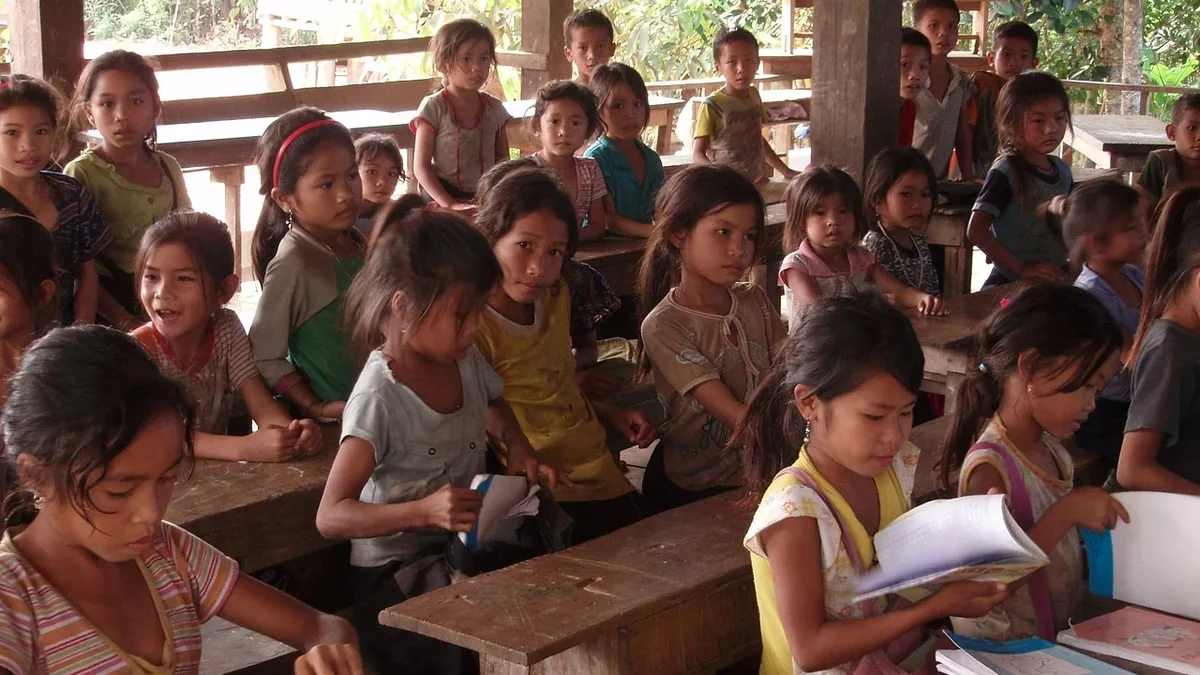
A recent attribution study published in Science Advances reports that 580 million children under 10 already endure at least 20 extra heat-stress days each year because of human-caused warming.
Heat-stress definition
The study defines a heat-stress day as any day when the wet-bulb globe temperature exceeds 28 °C, a threshold that marks moderate heat stress. The authors used climate models to simulate the present-day climate of 2023, when human activity has produced 1.3 °C of warming, and compared it to a pre-industrial climate without anthropogenic heat. The difference in the number of heat-stress days between the two scenarios is called an attributable or extra heat-stress day.
Global exposure by age
Using gridded demographic data from the stats database, the authors calculated how many people in each age cohort experience extra heat days. They found that 583 million children under 10 already live through at least 20 attributable heat days per year, accounting for 44 % of that age group. In contrast, 190 million people aged 60-69 face at least 20 attributable heat days, representing 30 % of that cohort.
Regional hotspots
The analysis shows that low-latitude countries record the most extra heat-stress days. For example, Côte d’Ivoire currently experiences 112 heat-stress days per year, about half of which are driven by human-caused climate change. Germany, by contrast, records only 0.1 heat-stress day per year on average, largely attributable to anthropogenic warming.
| Country | Heat-stress days (present-day) |
|---|---|
| Côte d’Ivoire | 112 |
| Germany | 0.1 |
South Asia and West Africa have the greatest childhood exposure to humid heat, largely because these regions have rapidly growing populations with the highest proportion of young children. The study notes that children face the greatest exposure for two reasons: there are more young people alive today (1.3 billion under 10) than older people (0.6 billion aged 60-69), and many low-latitude countries have fast-growing populations.
Future warming scenarios
The authors repeated their analysis for worlds warmed by 1.5 °C and 2 °C, using population estimates from the SSP2 scenario, which projects a peak of more than nine billion people in the second half of the 21st century. In the present-day climate, 11 % of all under-10s experience 100 or more extra heat-stress days per year. This percentage rises to 13 % in a 1.5 °C world and 23 % in a 2 °C world.
For people aged 60-69, the corresponding figures are 6 %, 9 %, and 17 %.
| Age cohort | 2023 | 1.5 °C | 2 °C |
|---|---|---|---|
| Under 10 | 11 % | 13 % | 23 % |
| 60-69 | 6 % | 9 % | 17 % |
The lead author, Rosa Pietroiusti, told Carbon Brief that the findings should inform climate-justice discussions, noting that children in developing countries have contributed the least to historical greenhouse-gas emissions. She also warned that the study’s focus on humid heat may understate the urban heat-island effect, because the data resolution does not capture local city-scale conditions.
Dr Qinqin Kong, a post-doctoral researcher at Stanford University who was not involved in the study, praised its robust methodology but cautioned that it might overstate the contrast between children and older adults. He argued that older people may also be highly vulnerable due to social circumstances, such as limited mobility and barriers to accessing cooling during heat events.
The study’s use of wet-bulb globe temperature, a well-established heat-stress metric, is a “really important step forward,” Pietroiusti said. She called for collaboration between climate scientists and health experts to identify metrics that best represent the health and educational impacts children will face.
The research highlights that, as the planet warms, children will continue to be the most exposed group to dangerous levels of humid heat, a fact that underscores the urgency of addressing climate change and protecting vulnerable populations.
Source: Carbon Brief